
/ 4 min read
The Moss Remembers: How the Chypre Came Back From the Brink
Ask a seasoned collector to name the most sophisticated family in all of perfumery, and sooner or later the conversation lands on the chypre. It is the accord of grown-ups: a bittersweet architecture of bright citrus poured over dark, damp earth, elegant and faintly severe, the olfactory equivalent of a tailored coat worn over bare skin. It takes its name from the island of Cyprus, and its modern blueprint from a single 1917 landmark — Coty's Chypre — that taught a century of perfumers how to make freshness and shadow hold hands.
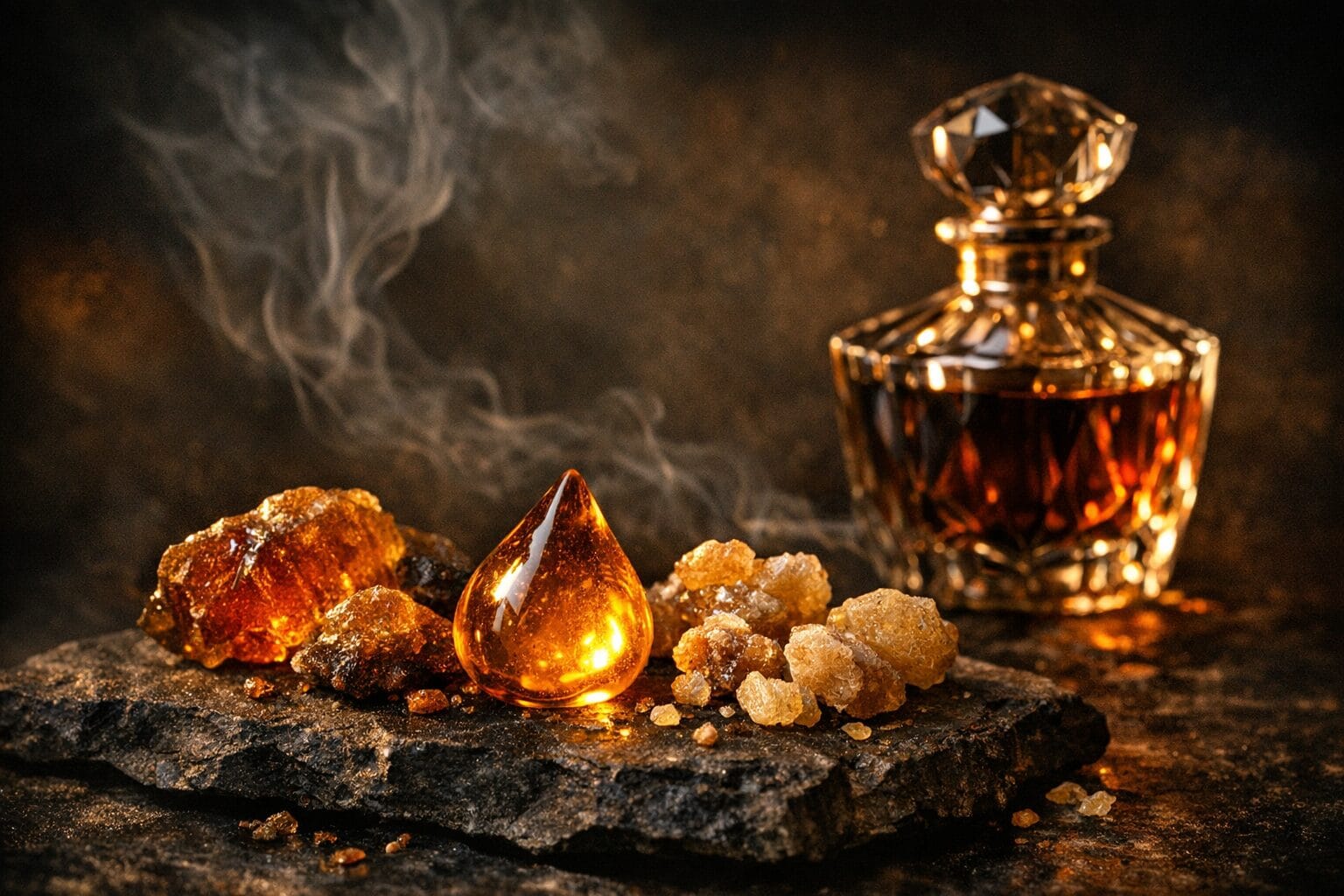
The chypre's spine is deceptively simple: a sparkling bergamot top, a floral heart of rose and jasmine, and a base built on two ancient materials, labdanum and oakmoss. That oakmoss is the whole secret. Harvested from a grey-green lichen, Evernia prunastri, that clings to oak bark in cool forests, it smells of the forest floor after rain: inky, earthen, faintly leathery, carrying a bitterness that keeps the sweetness of everything above it honest. Without it, a chypre is a portrait missing its eyes.
Which is exactly the crisis that nearly ended the family. Oakmoss carries two naturally occurring molecules, atranol and chloroatranol, among the most potent contact allergens known in fragrance. As the science hardened, regulators moved: the European Union effectively prohibited those constituents in cosmetics, and IFRA — the industry's self-governing safety body — restricted natural oakmoss extracts to trace levels. The great classical chypres, Guerlain's Mitsouko chief among them, were quietly reformulated. Devotees swore they could smell the loss — a hollowing at the base, a soul gone slightly dim.
For a while it looked terminal. Through the 2010s the chypre drifted toward the museum wing of perfumery, a family spoken of in the past tense while gourmands and clean musks owned the counter. New chypres grew rare enough to feel like acts of defiance, and the word itself began to read as a heritage label rather than a living style.
And then, in the neo-vintage turn now cresting in 2026, the moss remembered how to grow back. The current revival is not nostalgia in a bottle; it is reconstruction. Rather than mourn the banned material, perfumers have rebuilt the chypre's shadowed base from compliant parts — atranol-stripped moss preparations, resinous labdanum, earthy patchouli, and a palette of synthetic mossy molecules engineered to render that damp-forest facet without the allergenic freight. The family is being redrawn, not recreated.
The redrawn chypre is a different creature, and in some ways a better-mannered one. It is more transparent, its earthiness suggested rather than shouted, its old animalic growl softened into velvety, skin-close musks. That lightness carries an unexpected dividend: the modern chypre wears as effortlessly unisex as anything on the market, its bittersweet balance sitting outside the tired binaries of florals for her and woods for him. Where the vintage versions could feel like heirloom armour, the new ones feel like a second skin.
You can trace the movement across the trade press and the launch calendars — a steady arrival of compositions built explicitly around labdanum, patchouli and IFRA-compliant moss, and even playful reinventions, like By Kilian's popcorn-tinged floral chypre, that prove the family can still surprise. What the reviewers keep noting is how durable the shift has become. This is not a season's fad but a genuine repair: a beloved genre re-engineered to survive the very rules that once threatened to erase it.
There is something quietly moving in that. Perfumery is an art perpetually negotiating with constraint — with harvests, with regulation, with the slow disappearance of once-common materials — and the chypre's return is a small parable of how it survives. You cannot legislate away a memory. The scent of moss after rain lived on in the noses of the people who loved it, and so the craft found a hundred lawful ways to conjure it again.
Reach for a modern chypre and you feel both eras at once: the bright citrus lifting, the earth answering from below, the bittersweet handshake that has defined sophistication for over a century. It is older than almost everything on the shelf and, right now, one of the most quietly forward-looking things you can wear. The moss, it turns out, remembers. And so, thankfully, do we.
Before You Commit
Read about it. Then live with it.
Order a 2ml decant of any scent in the house and wear it for a few days before you commit.