/ 3 min read
Peach: The Note That Taught Perfume to Blush
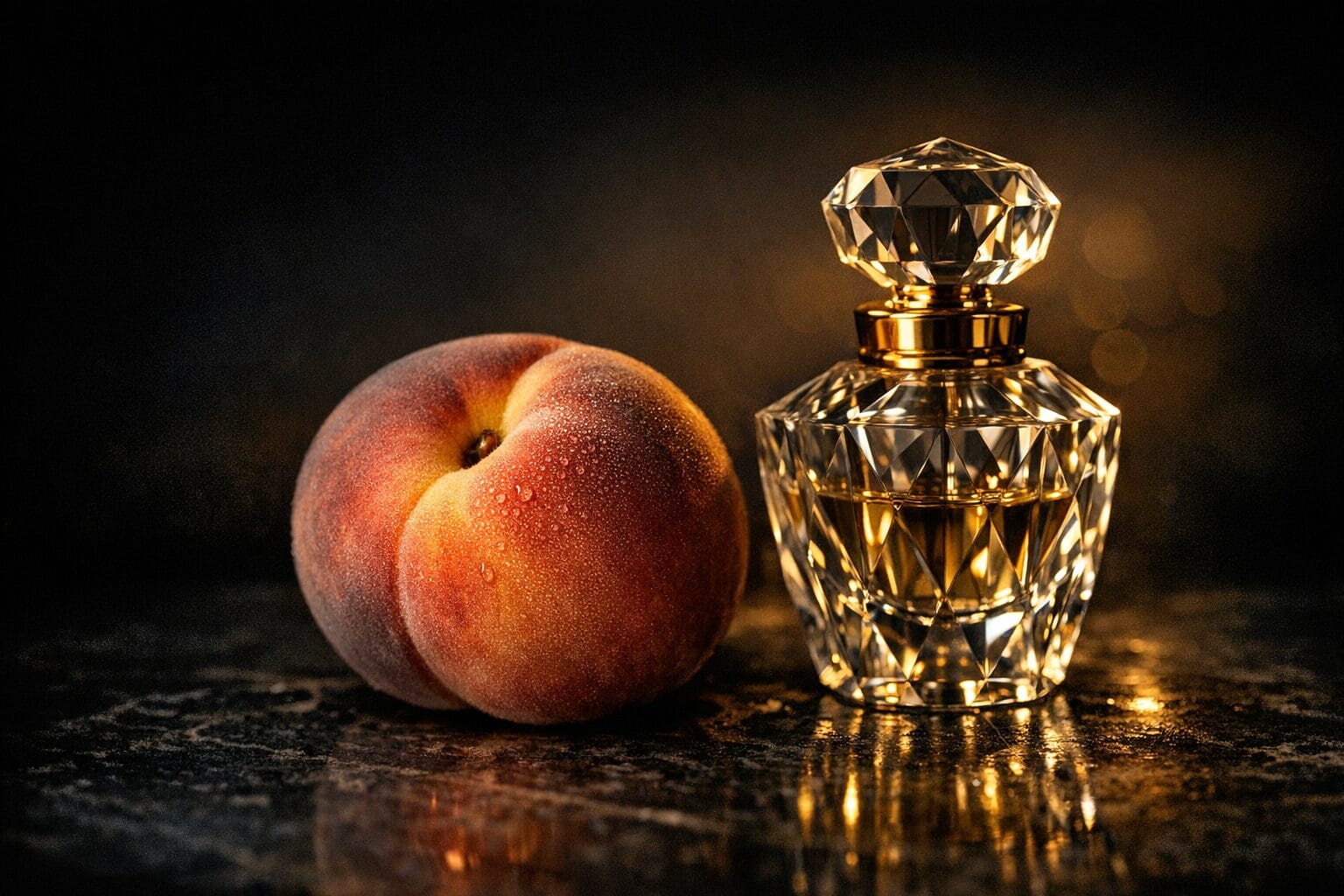
Of all the fruits that perfumery has pressed into service, none has fallen further from its origins than the peach. It arrived, in 1919, not as a summer candy but as an aristocrat — a warm smudge of velvet against the skin.
That debut was Guerlain's Mitsouko, in which Jacques Guerlain reached for what became known, misleadingly, as the "peach aldehyde." The joke of perfume history is that this molecule — aldehyde C-14 — is not an aldehyde at all, but a lactone: gamma-undecalactone. It did not give a perfume the taste of a peach so much as the sensation of its skin — the warmth, the faint down, the milky softness underneath. It was among the first synthetics to render a fruit as a feeling rather than a flavour.
For decades the peach behaved beautifully. It threaded through Femme de Rochas, it warmed the great chypres, it lent a sun-warmed skin to Féminité du Bois. It was a note of restraint — a suggestion, never a shout, always more colour than sugar.
Then came the fall. Through the 2000s the fruity-floral turned the fruit bowl into a sugar rush, and the peach became shorthand for cheap sweetness: the smell of drugstore body sprays and airport gift sets. A note that had once whispered now screamed confection, and connoisseurs quietly learned to distrust it.
2026 is reclaiming it, and doing so with a deliberate hush. Imaginary Authors released First Peach of the Season this spring — a ripe-peach accord shot through with citrus and a creamy, lactonic softness. The restraint is the entire point: not juice, but the blush and fuzz of the skin, wrapped in something like warm cream. It is offered as a single fifty-millilitre eau de parfum, unhurried and self-assured.
From Paris, Kilian has brought back Forbidden Games, first composed by Calice Becker in 2012 and reintroduced in 2026. Here the peach is honeyed, set against opulent florals — a fruity-floral gourmand returned deeper than before, its fruit closer to seduction than to sweets. That two respected houses reached for the same fruit in the same year is not coincidence; it is a change of weather.
Why now? Because the peach's redemption is written into the mood of the moment. The gourmand is drifting away from sugar toward texture; the lactonic "milk turn" prizes softness over sweetness; skin scents ask a perfume to feel worn rather than sprayed. And the peach's oldest secret is that its defining molecule is a lactone — the same creamy, milky family that stands behind coconut and warm skin. The fruit that the candy years abused is, chemically, the ideal fruit for an age that craves texture instead of sugar.
What the connoisseur is relearning is a fine distinction: the difference between smelling like a peach and smelling like the memory of one. A real peach in the hand is tart, wet, insistent. The peach that matters in perfume is quieter — the warmth of its skin against a cheek, the faint down that catches the light, a blush that is more colour than flavour.
There is a craft argument buried in all this. To render a peach well is far harder than to render a raspberry or a pear, because the peach is not really a smell of fruit at all — it is a smell of skin, of fuzz and warmth and the faint sourness where the flesh meets the stone. A perfumer who over-sugars it loses the thing entirely; the fruit survives only in the hands of those willing to keep it dry, soft, and a little melancholy. Both of 2026's peaches understand this, which is why they read as luxury rather than dessert.
A century after Guerlain first bottled that blush, the peach is being handed back its dignity. To wear it in 2026 is not nostalgia but taste — proof that the most abused notes are often the ones with the most left to say, once a perfumer remembers how to let them whisper.
Before You Commit
Read about it. Then live with it.
Order a 2ml decant of any scent in the house and wear it for a few days before you commit.