/ 3 min read
Cardamom: The Cool Fire of Niche Perfumery
There is a particular kind of spice that does not announce itself with heat. Cardamom arrives instead like a cool draught through a warm room — green, luminous, faintly camphorous — and then, a breath later, turns unexpectedly tender. Perfumers have prized this doubleness for a century, but for most of that time cardamom worked in the shadows, lending its silvery lift to an opening before ceding the stage to rose, oud or leather. In 2026, something has shifted. The spice that was always a supporting player has begun, at last, to lead.
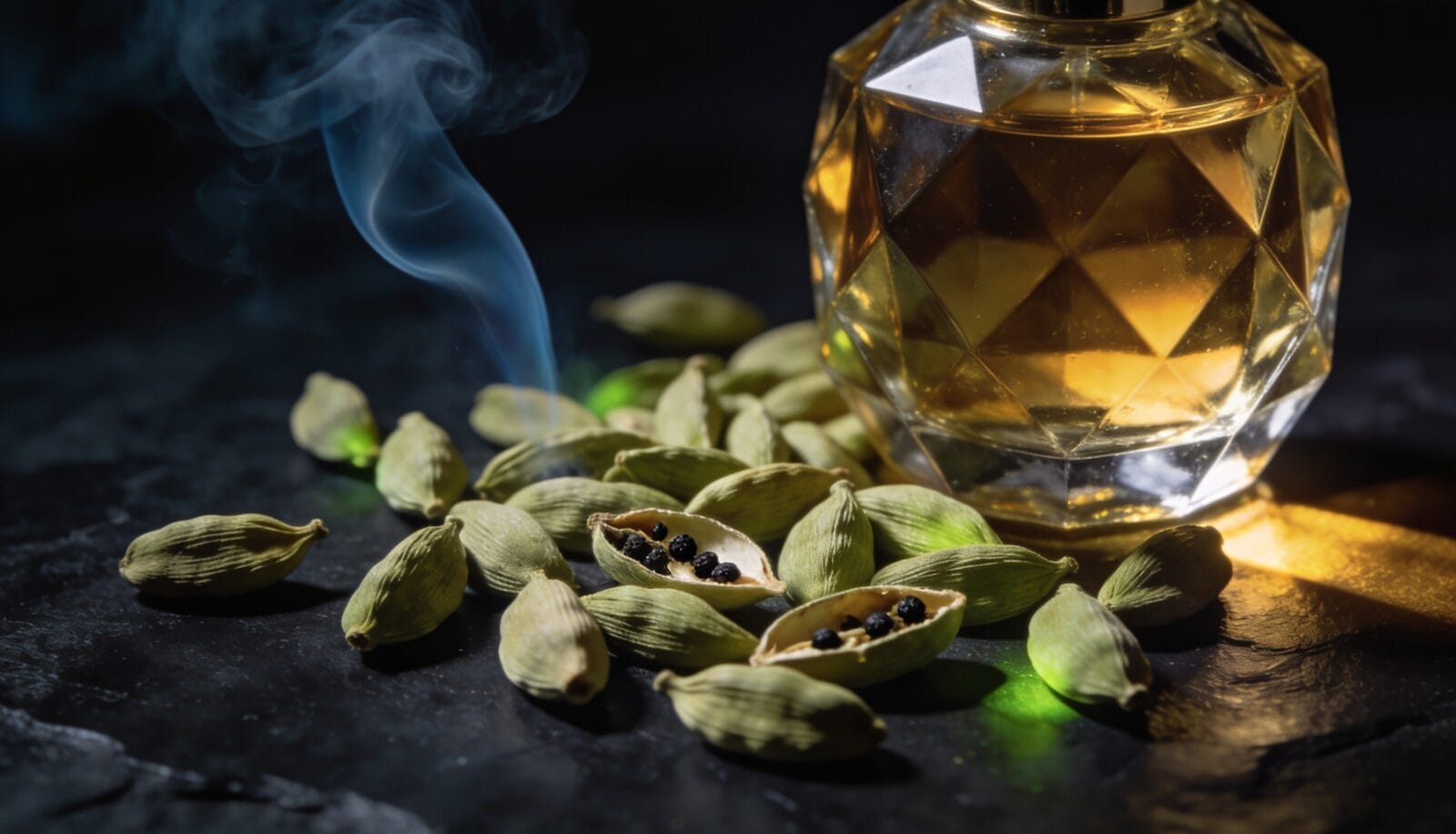
Its botany explains some of the mystery. Cardamom is the seed of Elettaria cardamomum, a tall relative of ginger whose pale-green pods are hand-picked, one by one, between September and April, before they split. Inside each pod sit tiny black seeds carrying an essential oil unusually rich in 1,8-cineole — the same bright, eucalyptus-like molecule that gives the spice its cooling, almost mentholated top. Around that coolness cluster warmer facets: lemon peel, resinous wood, a whisper of soap-clean florals. No single note in perfumery so convincingly holds warm and cold in the same hand.
Terroir matters here more than most people realise. Guatemala, not India, has become the beating heart of the trade, its Alta Verapaz highlands supplying well over half the world's cardamom. Volcanic soil and constant mountain humidity coax out an oil that perfumers consider purer and more uplifting than its Indian cousin — higher in that prized cineole lift, cleaner in its green transparency. When a modern fragrance opens with cardamom that feels like cold air off a wet leaf, it is almost certainly Guatemalan.
For decades that lift was cast in a supporting role. Cardamom was the flourish that made a fougère feel freshly barbered, the cool prelude that let an oriental's amber glow all the warmer by contrast. It read, for a long time, as a masculine gesture — a spice for the top of a shave-soap accord. But the note has quietly migrated: into feminine compositions, into the unisex confidential niche where genre lines have all but dissolved, and now into the centre of the frame itself.
The reason is a broader mood the trade has begun calling the New Naturalism — a turn away from the syrupy gourmands and blaring ambers of recent years toward spice worn as a lead voice rather than seasoning. Black pepper, saffron, ginger and cardamom are being written as the melody, not the garnish. Cardamom is the natural protagonist of that movement precisely because it refuses to be loud. It carries all the intrigue of spice with none of the aggression, an aromatic that flatters skin rather than shouting over it.
It helps, too, that cardamom is generous company. It marries into the woody family with ease, deepens the mossy melancholy of a chypre, and lends an oriental its first cool breath before the resins take hold. Pair it with iris and it turns silvery and aristocratic; set it against tobacco or coffee and it sharpens the gourmand, keeping sweetness honest. Few materials are so quietly diplomatic, able to make whatever surrounds them read more expensive.
To wear a cardamom-forward fragrance in 2026 is to make a small, knowing choice — for restraint over volume, for texture over sugar, for a scent that seems to inhale and exhale on the skin rather than sit flat upon it. There is a reason the finest houses keep returning to this pale-green pod. It offers what luxury has always secretly prized: not the loudest note in the room, but the most self-possessed. The cool fire, at last, allowed to burn in full view.
Before You Commit
Read about it. Then live with it.
Order a 2ml decant of any scent in the house and wear it for a few days before you commit.